


WASTED//BROKEN//GROWN is where I am serialising my most recent two books Wasted: When Trash Becomes Treasure (Ludion, 2020 – now sold out in book form) and Broken: Mending & Repair in a Throwaway World (Ludion, 2023) and where I will be publishing the final book in the trilogy, Grown: Design That Gives Back, but only with your support. Subscribe and upgrade to paid to get all three books delivered to your inbox, chapter by chapter, and to support me in writing the third book.
‘But if they perished in his pocessiom without their due use: if the fruits rotted, or the venision putrified, before he could spend it, he offended against the common lae of nature and was liable to be punished.’
– John Locke, Second Treatise of Government, 1690
As I write, the sweet aroma of banana bread is wafting up from my bread-maker downstairs – the result of three sad, spotty, brown bananas that had lain uneaten in my fruit bowl all week. I haven’t gone quite as far as Great British Bake Off winner Nadiya Hussain and made vegan pulled ‘pork’ from their skins, but the idea that food should not be wasted was drummed into me from a young age.

Our school-dinner policy meant that only clean plates earned dessert, and our parents referred to the devastating famine in Ethiopia every time my sisters and I were unable—or unwilling —to finish our peas. As a child, I could never understand how eating my peas would benefit starving Ethiopians, but there is, in fact, a genuine, albeit complex, connection between food waste in wealthy nations such as the UK and the almost one billion people worldwide who are undernourished even today.
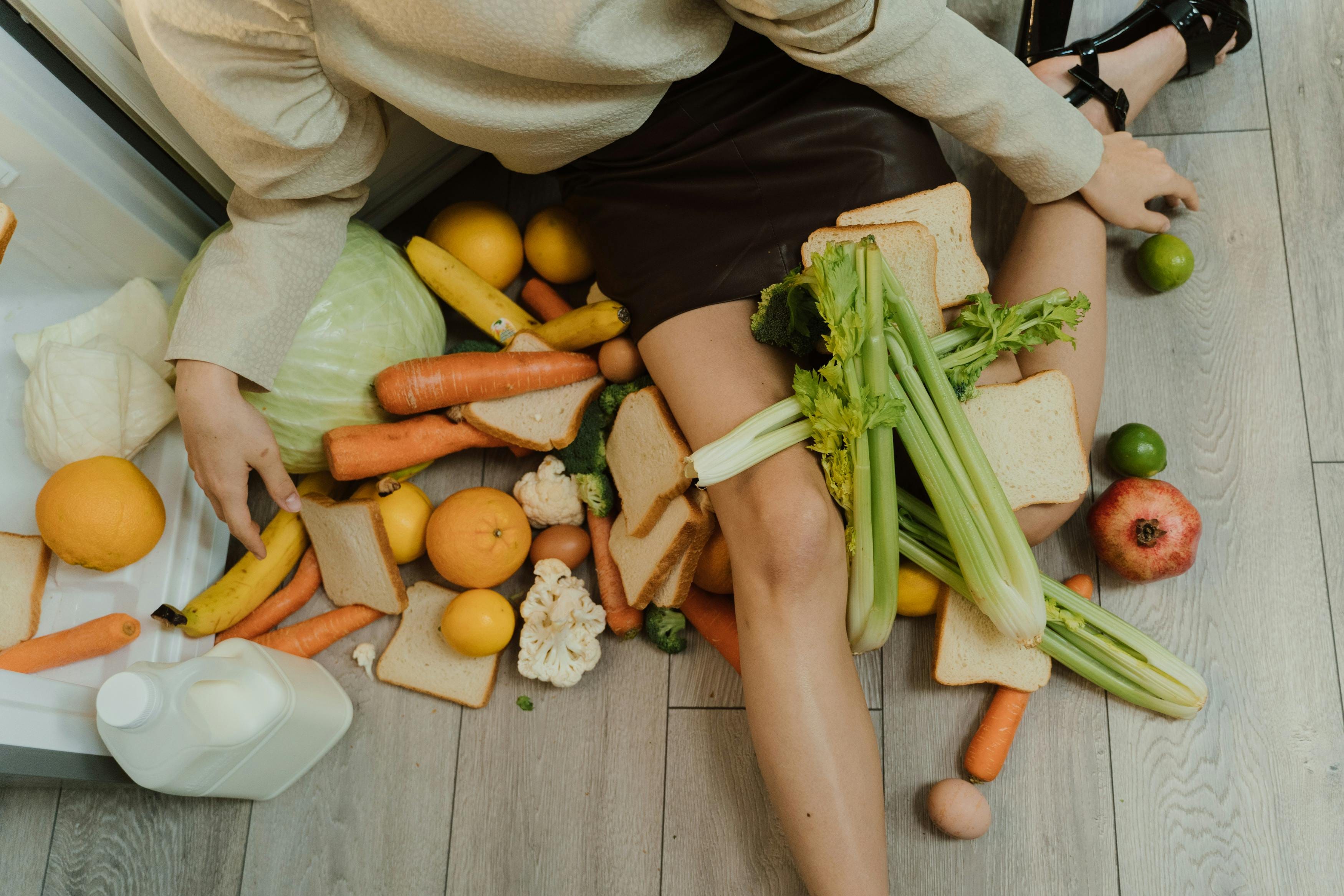
Approximately one-third of all food produced for human consumption globally – some 1.3 billion tonnes – is lost or wasted. In the USA, that figure is as high as 50%. The Japanese dispose of ¥11 trillion (more than £81.7 billion) worth of food every year. And if these figures seem high, the United Nations (UN) Food and Agriculture Organization makes a distinction between food loss and food waste that is worth exploring. The word ‘waste’ is reserved for food that is spoiled or discarded by retailers and consumers.

Harvests left to rot in fields because of bad weather, labour shortages or price collapses; the food that is damaged in transit from supplier to supermarket; the 90% of tomatoes discarded because they didn’t meet aesthetic standards at one commercial farm in Queensland, Australia; and the 13,000 end-of-loaf slices of fresh bread a UK bakery throws away every day because supermarkets don’t sell sandwiches made from crusts, are all, somewhat euphemistically, labelled as ‘losses’ instead. So too is the excess food produced under subsidy by farmers because of policies designed to prevent food shortages that are yet to be reformed in the same way that Europe’s still-controversial Common Agricultural Policy has been.

So, when we hear about food ‘waste’, it’s only the tip of the iceberg. And in Britain, we waste the equivalent of one in every three bags of shopping we bring home from the supermarket. In today’s global and intertwined food markets, it is difficult to avoid the fact that if rich nations stopped throwing away internationally traded commodities grown on limited agricultural land, there would be enough food for everyone. The 800 million people currently facing chronic hunger worldwide could be fed with just a fraction of what those in rich countries are currently discarding.
Food inequality happens within nations too. The USA produces more food than any other country in the world and yet more than 37 million Americans (including more than 11 million children) have limited or uncertain access to food, and face hunger on a daily basis. Food poverty in the UK has hit a record high. FareShare, a charity that distributes surplus food to those living in poverty, estimates that 8.4 million British people—equivalent to the population of London—struggle to afford food.

In Cornwall, I recently took part in an Office for National Statistics survey that included questions about whether we ever had to borrow money or sell possessions to put food on the table. The interviewer told me that it was not uncommon for people living in my postcode area to answer ‘yes’ to those questions. The Trussell Trust estimates that almost half the people who use its network of 420 food banks have endured at least one day without a single proper meal in the preceding month.
The issue of food waste is more than a simple matter of unequal distribution. Green waste, including food, is the thing we discard most – it makes up 44% of global waste streams. From an environmental perspective, green waste perhaps seems less concerning than something such as plastic—after all, it biodegrades, right? It does, but it emits more than three gigatonnes of CO2 equivalent in the process. If food waste were a country, it would be the third-largest greenhouse-gas emitter in the world, behind the USA and China. And while this food is being wasted, Amazonian rainforests—vital for absorbing CO2 from our atmosphere—are being cleared to produce more.
Environmental journalist George Monbiot argues that what we deem ‘natural’ is in fact what we remember from childhood. To most of us, farms seem a perfectly natural part of the landscape, and yet the patchwork of neatly ploughed and planted fields that now stretches across continents was once diverse woodland, a series of complex ecosystems teeming with life at every level. In our dedication to food security, we have converted genuinely natural landscapes into monocultural food factories. Despite initiatives to counter this, such as the European Union’s (now defunct) set-aside policy that paid farmers to leave part of their land uncultivated, the UN predicts a 25% decline in land productivity, owing to intensive agriculture—enough to threaten our ability to produce enough food to survive as a species.

‘The main way that most people will experience climate change is through its impact on food,’ says Tim Gore, head of food policy and climate change for Oxfam. ‘What they eat, how it’s grown, the price they pay for it, and the availability and choice they have.’ And, of course, people in the world’s least wealthy nations are the most vulnerable. Extreme weather events caused by climate change, such as hurricanes, wildfires and droughts—as well as the slow and steady rise in sea levels that encroach on agricultural land—already pose an existential threat to the food supplies of the world’s poorest people. The UN predicts permanent droughts across vast swathes of our most populous countries by the middle of this century, including the American Southwest from Kansas to California and into Mexico. ‘Disruptions in food supply will affect virtually everyone,’ says Jerry Hatfield, director of the US National Laboratory for Agriculture and the Environment.
Clearly something must be done about food waste. There is already legal guidance that dictates what producers must do about their surpluses. In the UK, a food and drink waste hierarchy provides puts methods of tackling the problem in priority order, listing the redistribution of food for human consumption second only to waste reduction. And some organisations are taking heed. Pret a Manger donates food that remains unsold at the end of each day to charities and hostels supporting people affected by homelessness, and apps such as Olio and Too Good To Go enable people to trade surplus food locally.

InStock, a pop-up restaurant in Amsterdam, serves Kentucky Fried Goose, made from birds shot down at Schiphol Airport to prevent them from fouling jet engines and poaches misshapen fruit in red wine that has been open too long to drink. More than a thousand ‘social supermarkets’ across Europe sell damaged or close to use-by date food at reduced prices, and Rotten Fruit Box is a subscription service for freeze-dried fruit that would otherwise have been left to rot. And yet Tristram Stuart, author of Waste: Uncovering the Global Food Scandal, is still reporting locked bins containing edible food spoiled with blue dye being transported straight from supermarkets to landfill—ninth on the UK government’s hierarchy and excusable only as a last resort. The food industry clearly has a long way to go in reducing food waste and redistributing surplus to those who are currently going hungry.
However, not all food waste is avoidable, and neither is all of it edible. Think of the shells from eggs or seafood, the husks from coffee beans or the fleeces from sheep raised for meat. Every time we process animals and vegetables into food, we leave behind inedible by-products—all of which contribute to climate change as they decompose in landfill sites. The second directive in the UK government’s food waste hierarchy is redistribution—firstly as food, but secondly in the reuse of bio-material to make industrial products, and it is here that the projects in this chapter come in.

Instead of taking raw materials from the earth, a new generation of designers and makers is looking to these waste streams, transforming something empty, finished and unwanted into something meaningful, new and desirable. British designer Bethan Gray has collaborated with Nature Squared to turn feathers and shells into furniture and home accessories fit to be passed down through generations. Basse Stittgen makes tableware from damaged and out-of-date eggs. Solidwool has injected new worth into a failing local wool industry, turning something that had been downgraded to waste back into the valued commodity it once was. And Ana Cristina Quiñones, Atticus Durnell and High Society are all finding ways to transform the waste generated by our obsession with coffee into something positive. On their own, these projects aren’t any more likely to resolve our global food problems than my banana bread is, but they may be enough to start conversations and change mindsets – and, with a little luck and a lot of perseverance, that may just be enough to start something that will.